Reflections on “Come to the Kitchen Table” by Carreg Creative at the Wales Real food and Farming Conference, 2025
Part 1: The Kitchen Table
Words by Siȃn Barlow, photos by Lindsey Colbourne
March 2026
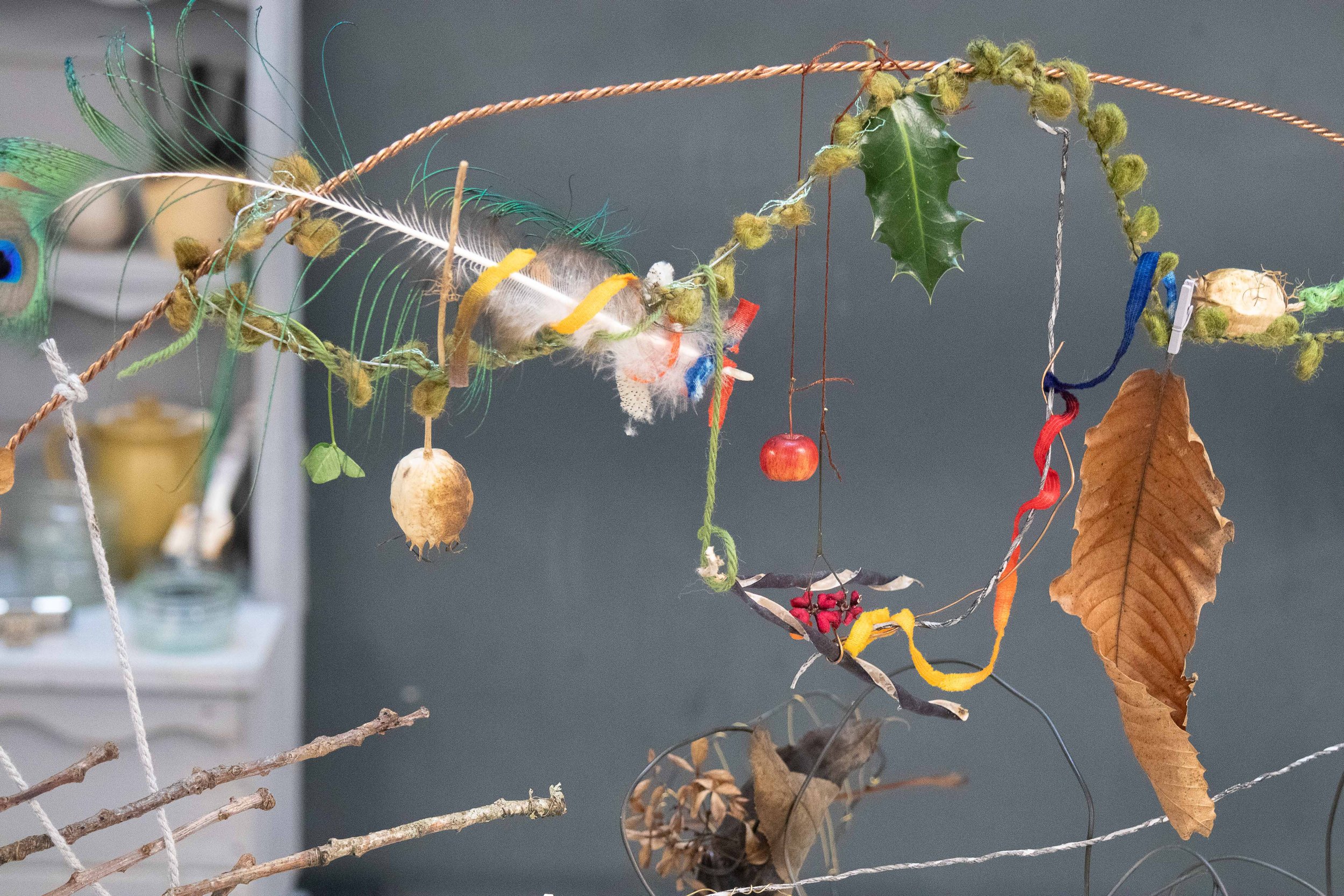
Over the last two years, we at Carreg Creative are grateful to have been given the opportunity to bring an arts strand to the Wales Real Food and Farming Conference. In the first of this 2-part blog, we describe the arts strand of the 2025 conference, share a selection of photographs, and offer some background to the work that we have been doing.
The Wales Real Food and Farming Conference offers an annual event that aims to give both nourishment and inspiration to the people who are working in food and farming in Wales and beyond. “Real food and farming” perhaps means different things to different people, but it feels true to say that there is a shared commitment to an approach that does not situate human beings as outside of the natural world, but at home here; and to work that is done with care. In designing our work, we have taken the conference’s aims of nourishment and inspiration very seriously, and hospitality and working with care have been important principles.
“Come to the Kitchen Table”

The title of the 2025 conference was “Communities, Food and Farming, Working Together”.
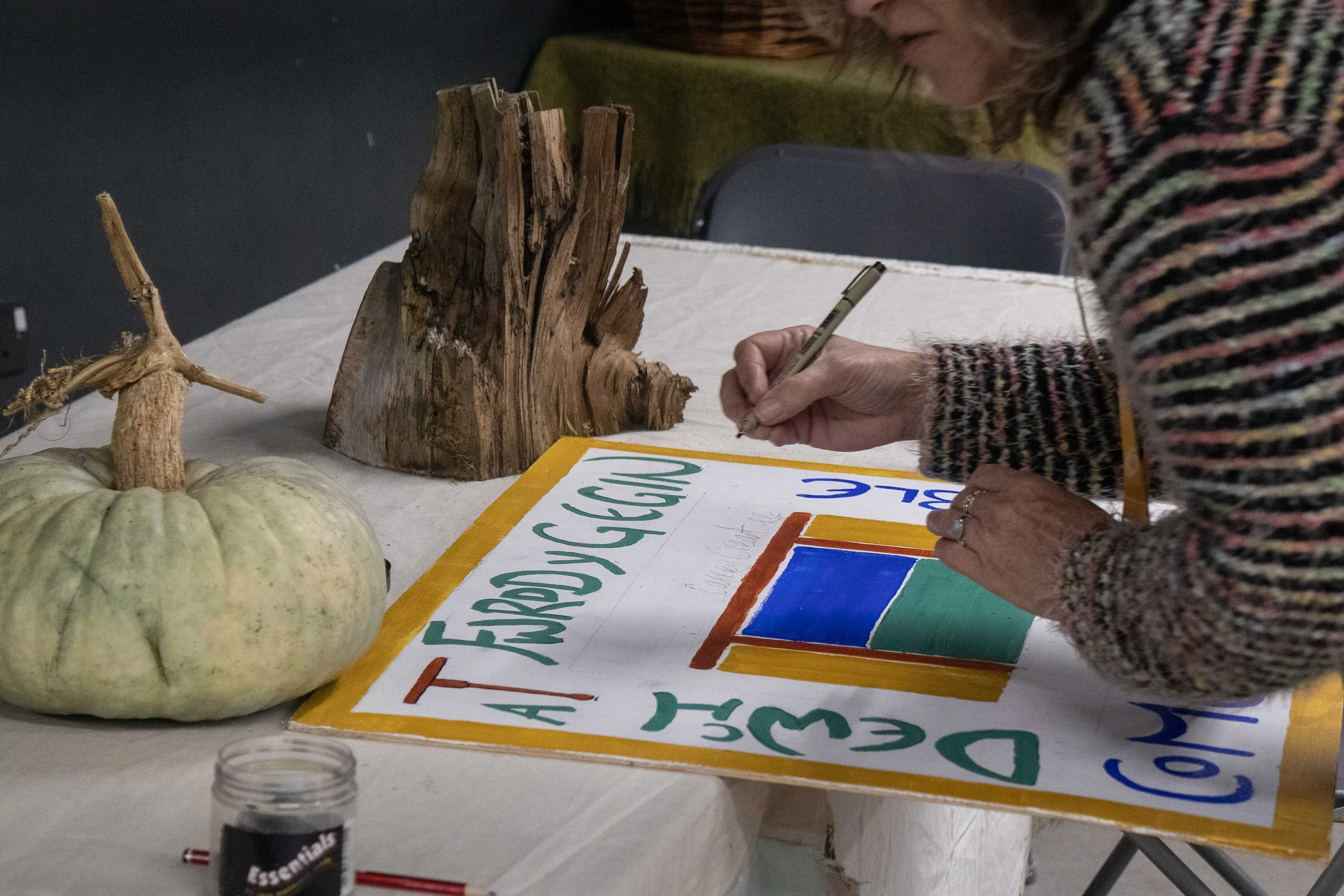
We took, as our starting point for our work, the image of people working together around a kitchen table. A kitchen table is a place of eating and drinking, it’s also a place of cooking, conversation, gossip, plotting and crafting; a working zone and a meeting place. We go there to do the kinds of work that can happen in a place where we are likely to be interrupted. Sitting at the kitchen table puts us in the presence of anything or everything in the wider community that surrounds us: animals, plants, people of all ages, and piles of all kinds of stuff. We sit down at the kitchen table and something or someone joins us.
The conference was held at the campus of Pencoed further education college, in Bridgend County Borough. “The Kitchen Table” was in the foyer of the land-based studies building, which is the department for students of agriculture, horticulture and animal care. There are challenges and surprises to spending an extended period of time in a college foyer, and to working creatively there. A foyer is a connecting-space: in some ways it’s like a kitchen table, in other ways it’s more like a crossroads.
Over the course of two days, many many people passed through: conference participants on their way to different sessions; college students and staff following their daily routes and routines; and people searching for the things that people search for – a place, a person or people, refreshments, toilets. The busy flow was the reason for us being just there, where everyone would be sure to encounter the arts strand of the conference.
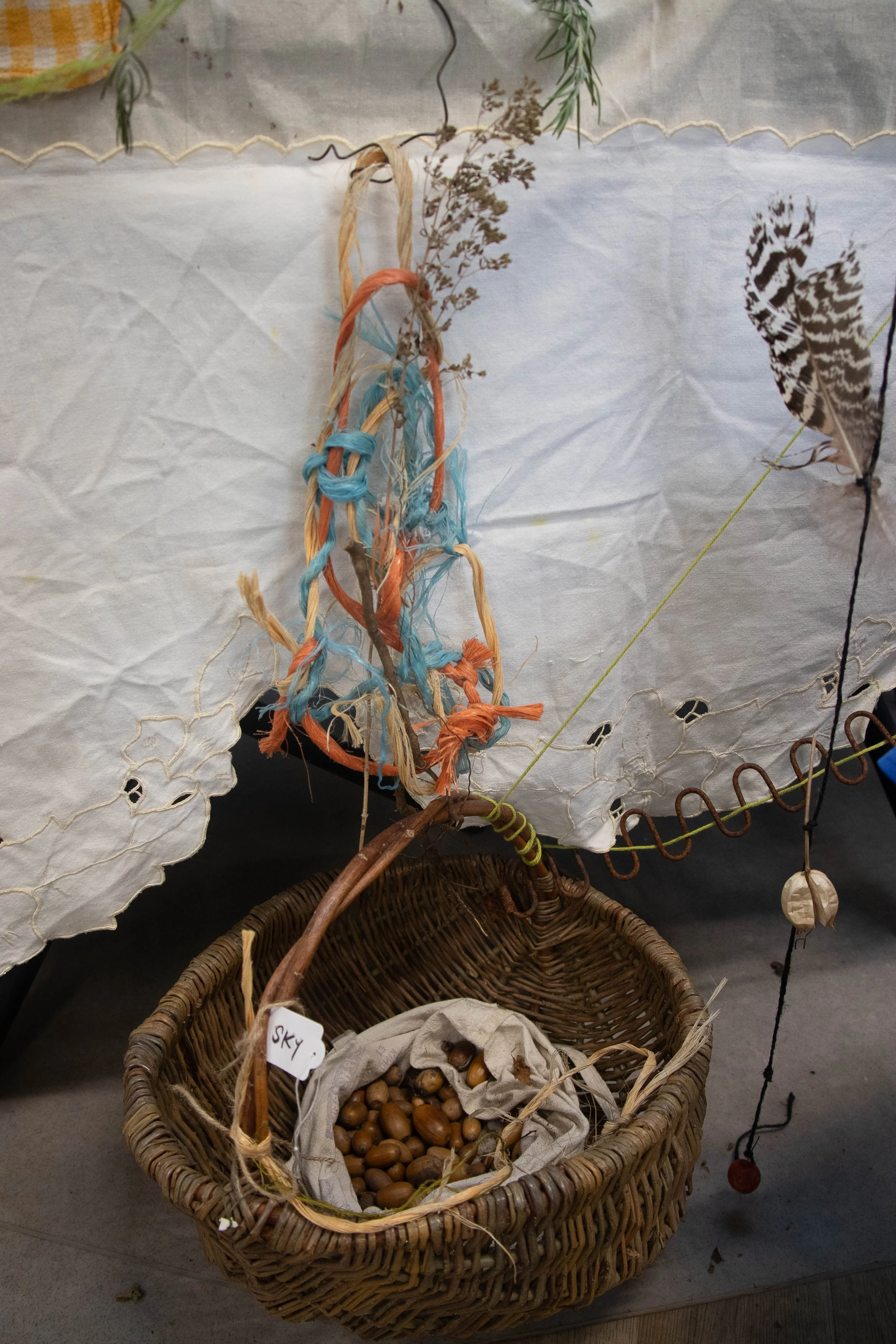
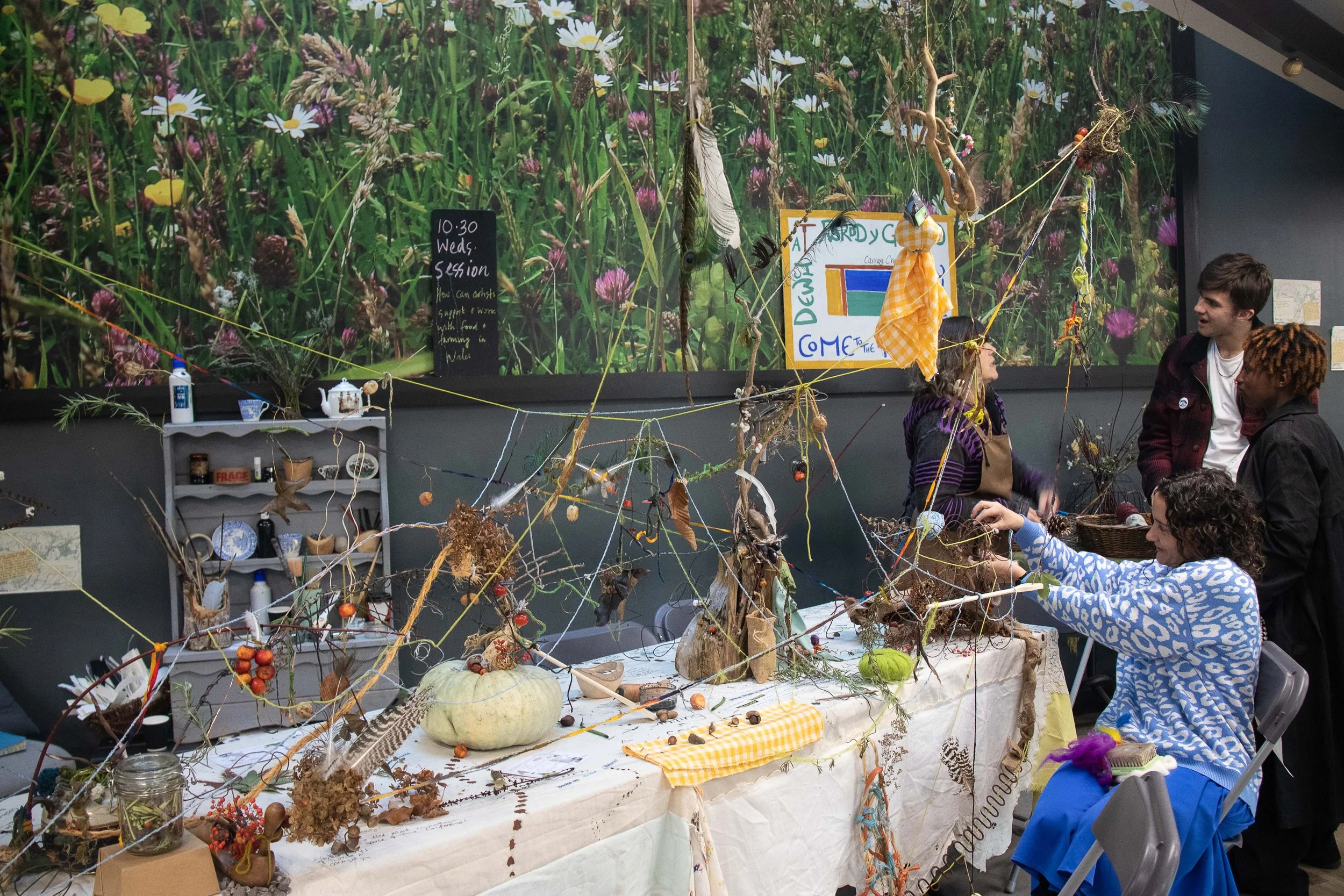
Keeping in mind the principles of care and hospitality, we wanted to offer a zone that was alternative and complimentary to other conference spaces: somewhere friendly and welcoming where people could slow down and give their minds a rest, recharge and reflect, and find refreshment and refreshments. Within that zone, we extended an invitation to pause for a while to work with us, hands-on, on a common piece of creative work - a sculptural installation that began on the table.
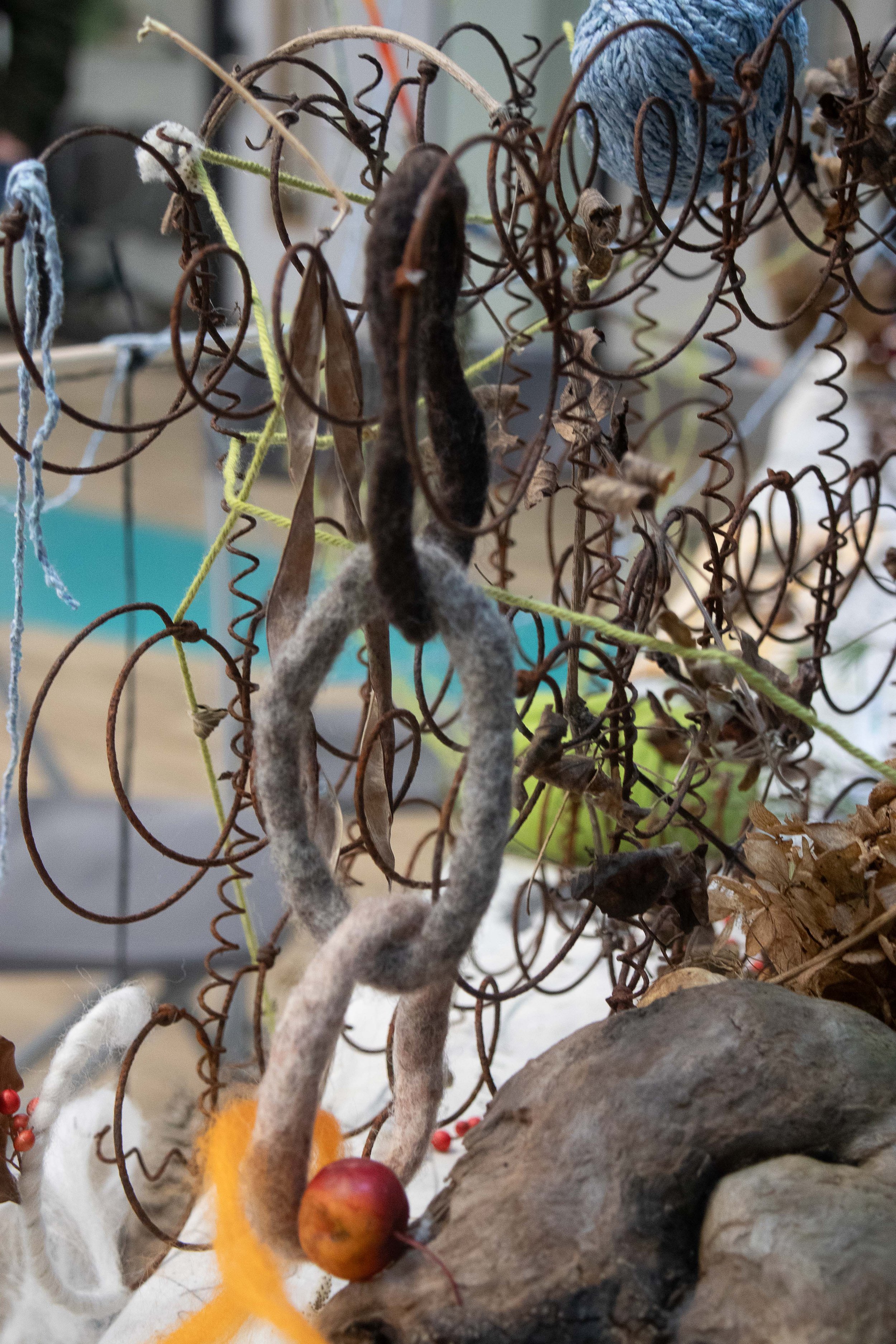
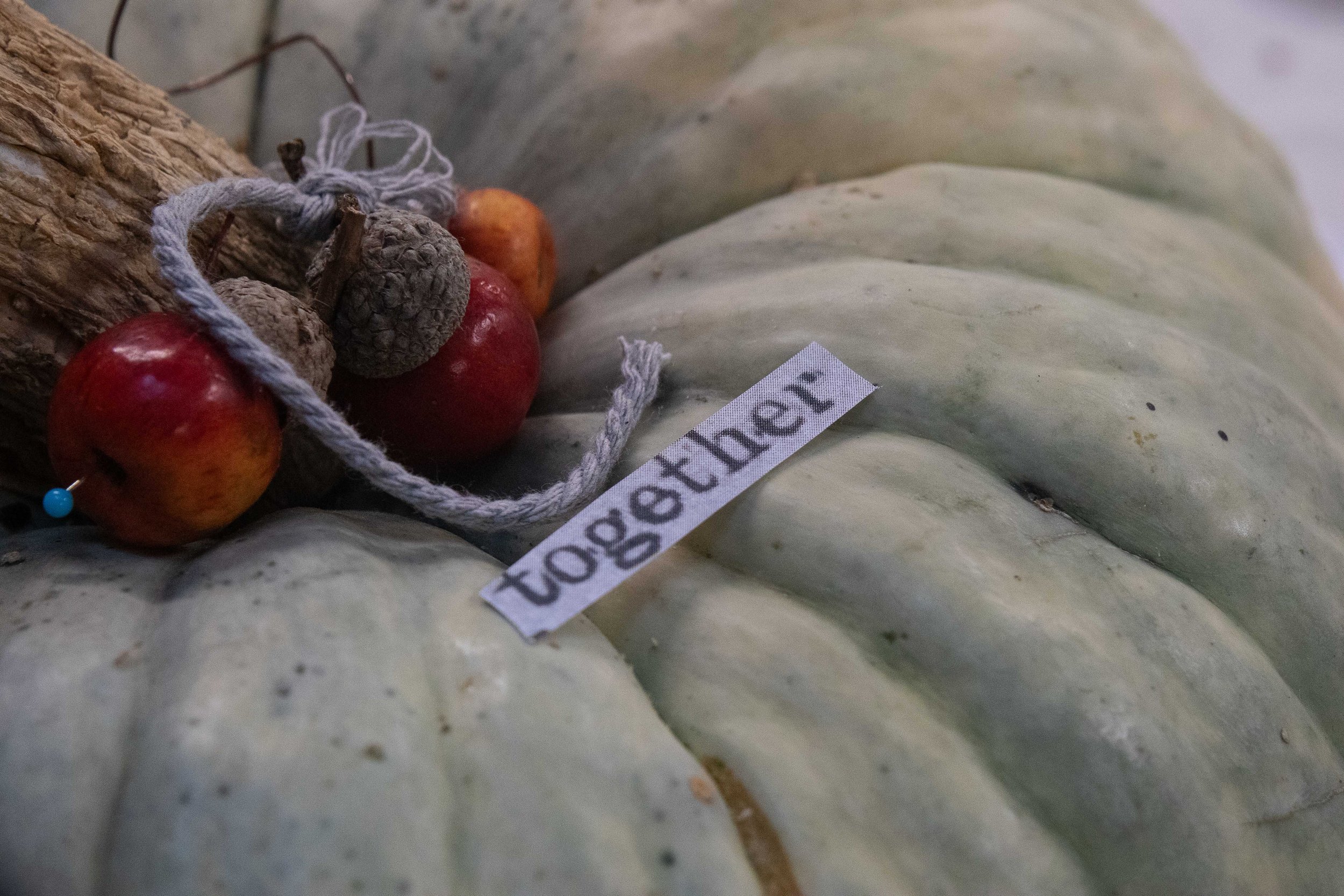
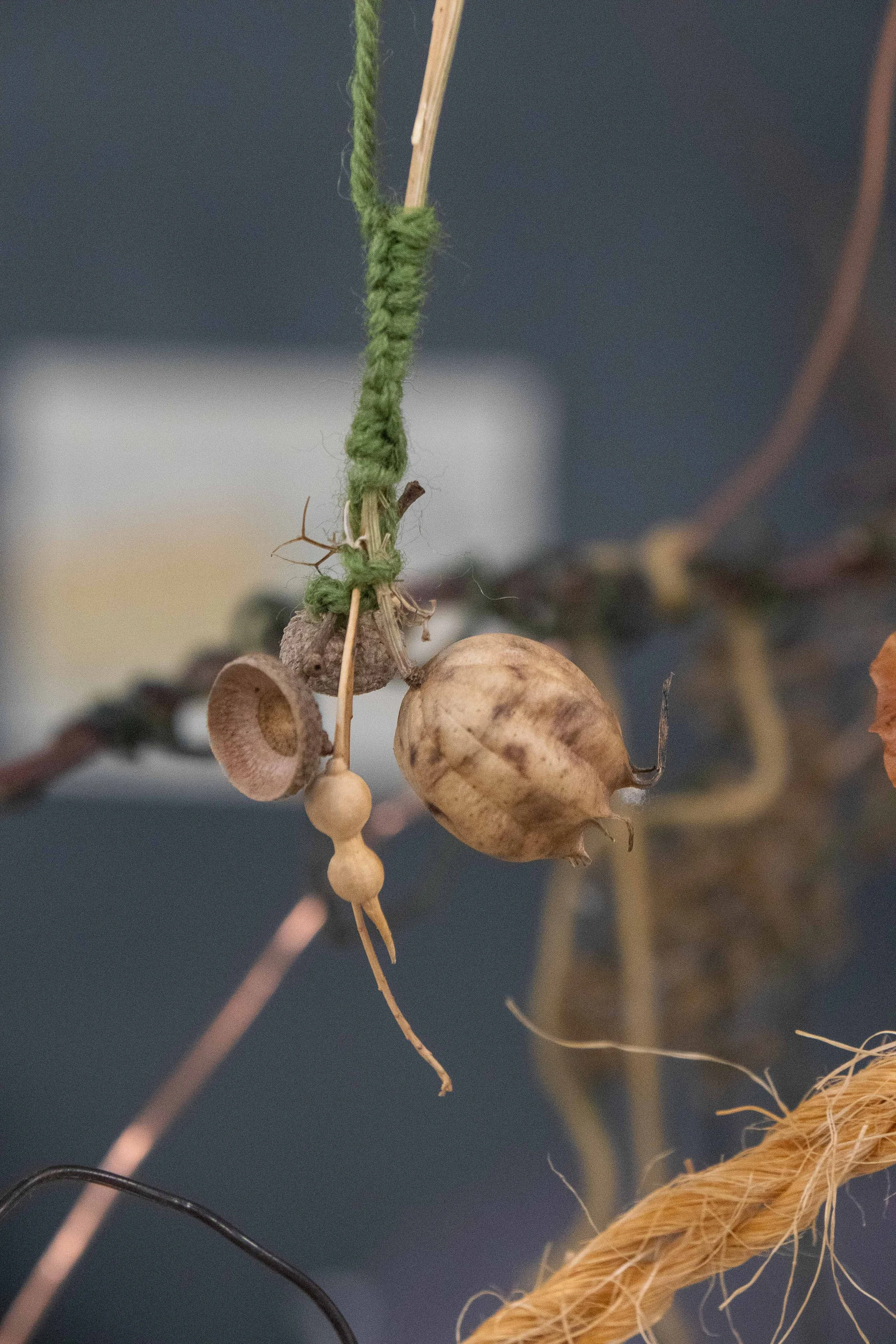
To tie in with the conference title and theme, which sought to explore the links between communities and farmers and food producers, the theme we focussed on was connection. We asked people to consider what connection might mean, and to create connections within the installation. We were working with our hands, using materials, tools and objects, so this was not a mental exercise, but a material exploration of what connection might resemble: what might connection look like or feel like when approached creatively? The work grew outwards, very organically, from the table and into the space of the foyer.
To conclude
We think that the work did gladden people and lift spirits, giving nourishment and inspiration. A passer-by was heard to say “I wish this was always here”.

What we created together was playful and friendly, with a non-serious and hospitable character. It seemed to have a life of its own, and was physically engaging in texture and colour, enticing people to look at it, walk around it, touch it and appreciate it. It was loose and rambling in its form, and was constantly changing and evolving, but it remained at all times coherent, and its overarching qualities of beauty and imagination were immediately apparent.
Towards the end of the second day we carefully deconstructed it and gave away the pieces: small, strange and beautiful objects that people could take home as they were leaving.

In Part 2 of this blog, “Working Together” , we will share some insights and patterns that are emerging from our ongoing exploration of the question of the ways in which creative practitioners, such as artists like ourselves, can support and work fruitfully with those involved in food and farming in Wales
LINKS: